
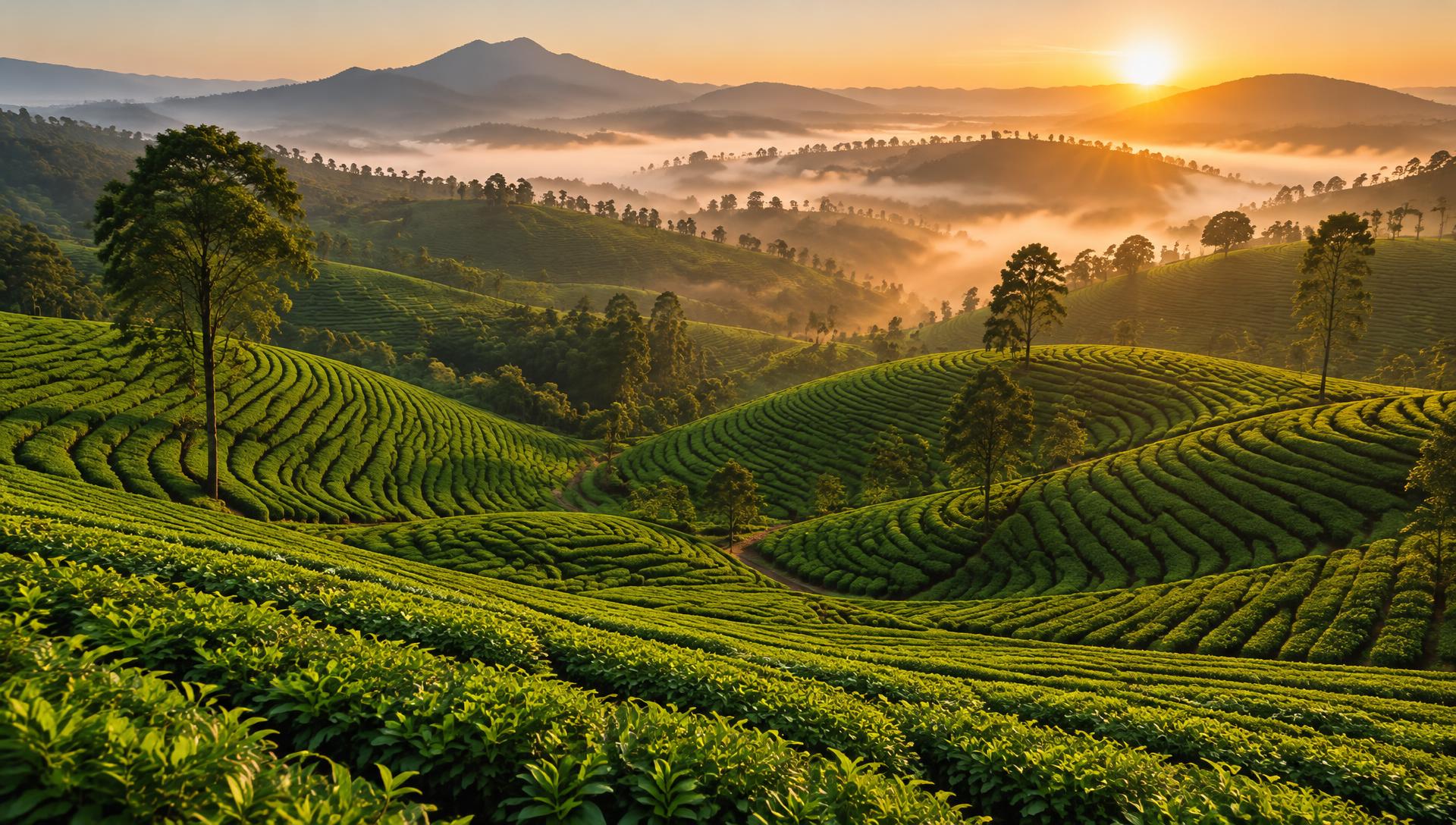
Four origins · One Oman hub
The tea origin portfolioأصول الشاي
India, Sri Lanka, Kenya and Burundi — distinct growing landscapes, cup characters and blending roles, brought together through our Muscat trading hub.
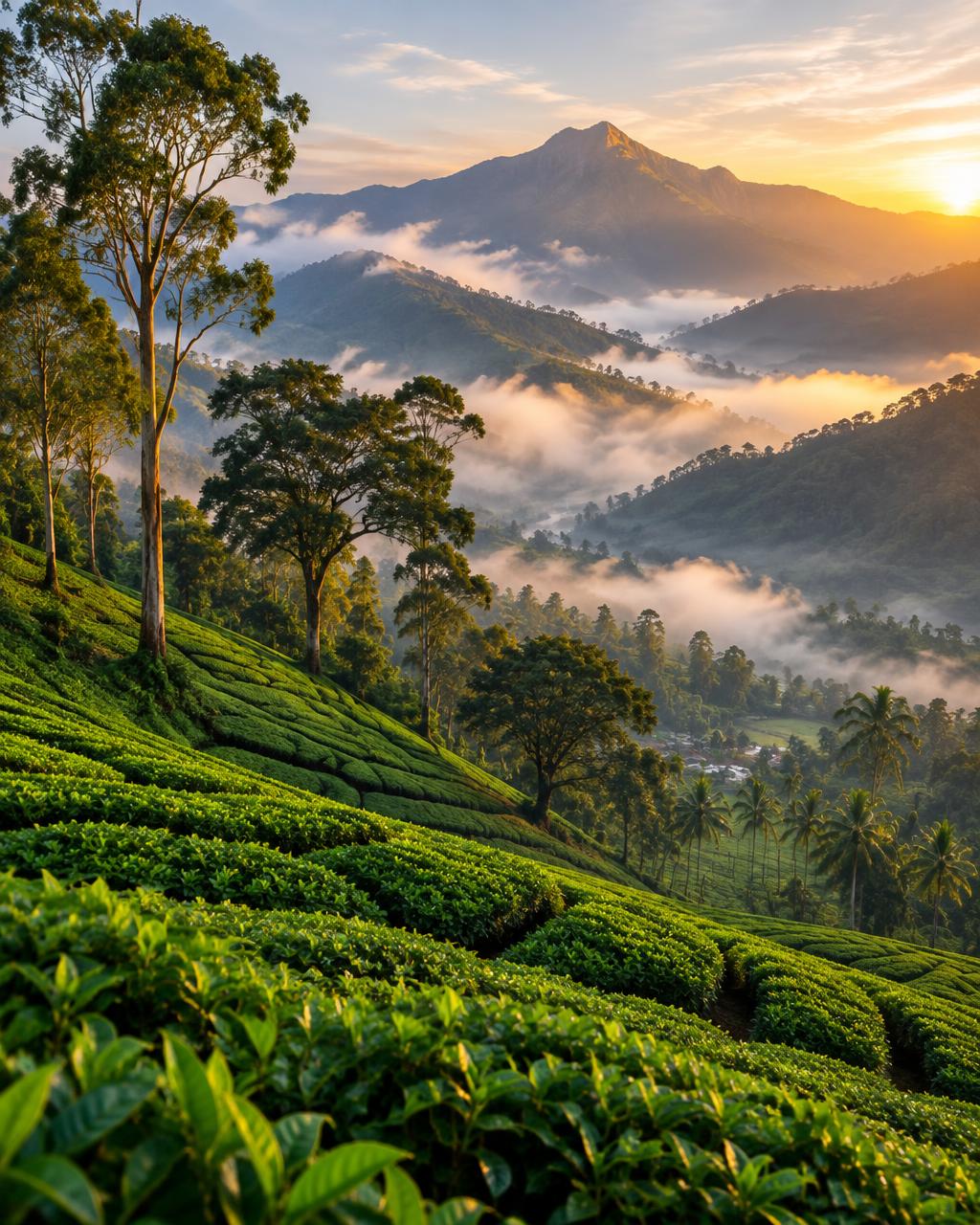
South Indian highlands · Nilgiris
Origin 01
India الهند
Fragrant · Bright · Brisk
South Indian teas offer aromatic clarity and versatile strength, from fragrant orthodox leaf to brisk CTC styles for everyday blends.
- Growing landscape
- The Nilgiri hills combine cool mountain air and high-altitude gardens. Season, elevation and manufacture shape each lot’s aroma and body.
- In the cup
- Often bright and brisk, with floral or fruity notes in orthodox teas. CTC styles produce a stronger, faster infusion suited to milk service.
- Tea styles & grades
- Orthodox leaf and broken grades; CTC styles. Request a current lot specification and sample before selecting a grade.
- Trade applications
- Origin-led loose-leaf tea, breakfast blends, iced tea and milk-tea service; smaller grades can suit tea-bag production.
- Brewing starting point
- Black tea: begin with 2–3 g per 200 ml of freshly boiled water for 3–4 minutes; taste and adjust for the grade.
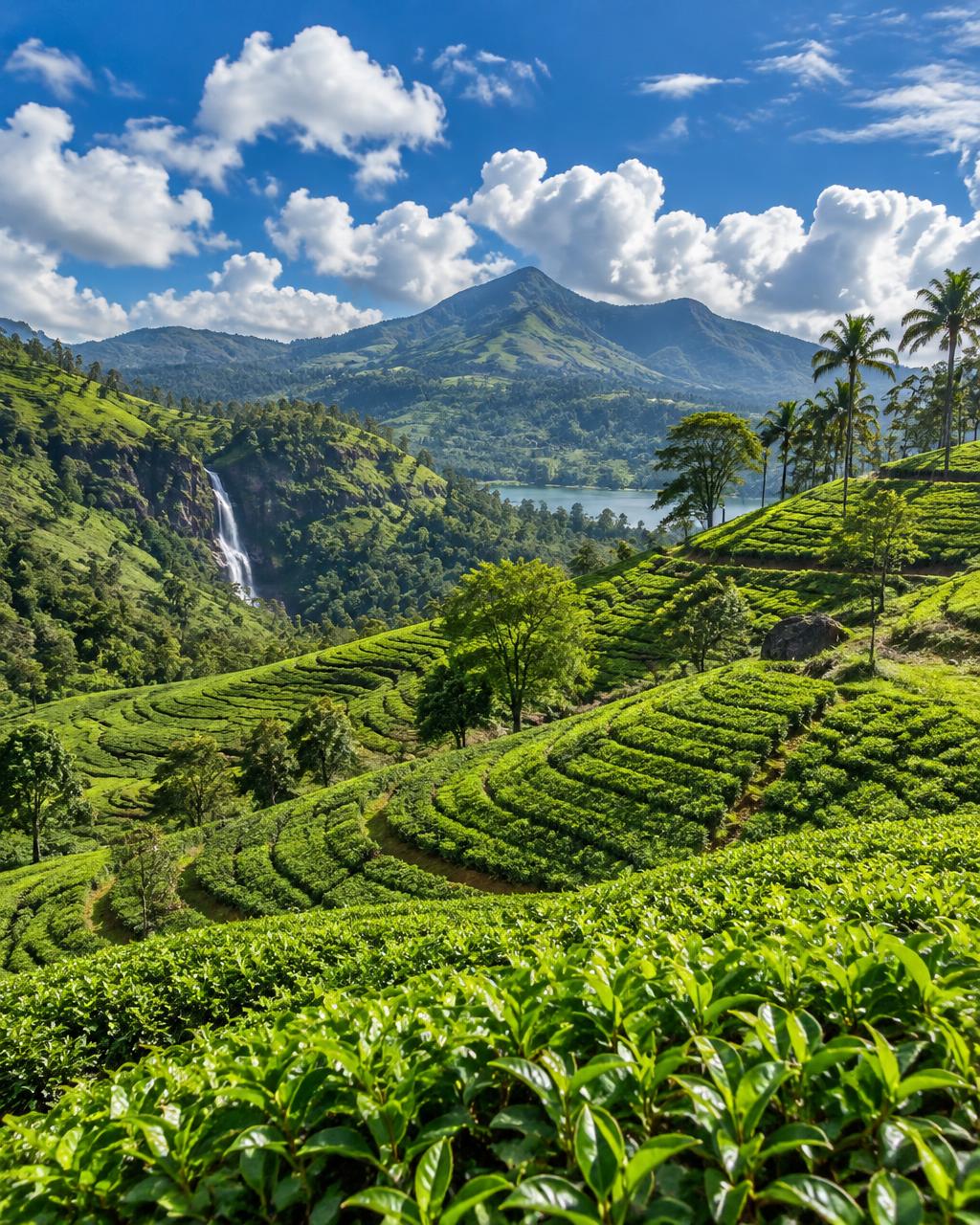
Ceylon · Highlands & southern foothills
Origin 02
Sri Lanka سريلانكا
Bright · Brisk · Diverse
Ceylon tea spans delicate high-grown aromas and fuller low-grown cups. District and season give this island origin its remarkable range.
- Growing landscape
- Nuwara Eliya, Dimbula, Uva, Kandy, Uda Pussellawa, Ruhuna and Sabaragamuwa offer distinct growing environments across different elevations.
- In the cup
- High-grown lots can be fragrant and lively; lower-grown teas can offer a fuller body. Brightness, colour and aroma vary by district and season.
- Tea styles & grades
- Predominantly orthodox black tea, including OP, BOP and finer grades; green and white styles also exist at origin.
- Trade applications
- Single-origin retail lines, premium loose-leaf service, iced tea, breakfast blends and tea bags selected to suit the particle size.
- Brewing starting point
- Orthodox black tea: 2–3 g per 200 ml, freshly boiled water, 3–4 minutes. Taste finer grades earlier, around 2–3 minutes.
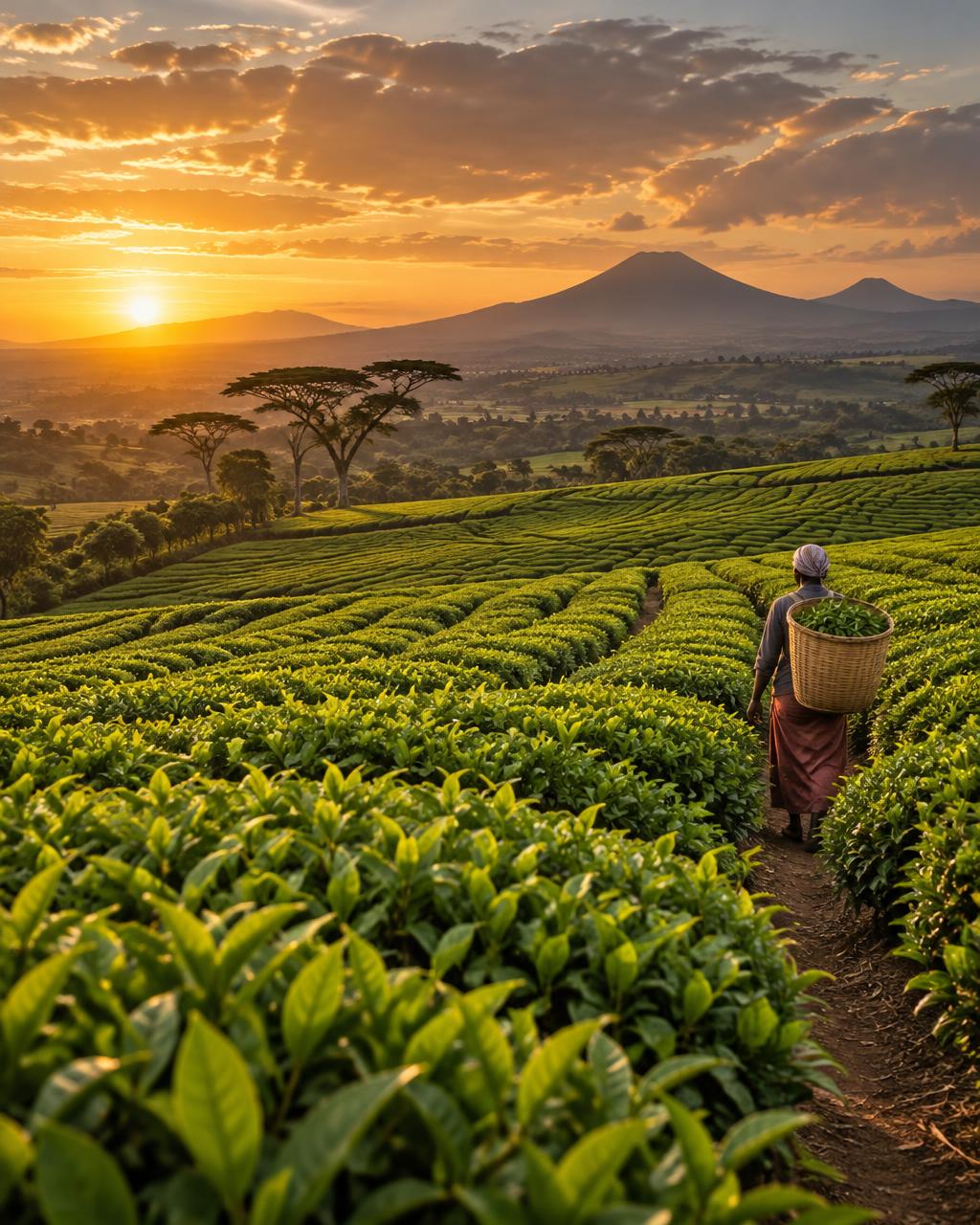
Kericho · Kisii · Mount Kenya highlands
Origin 03
Kenya كينيا
Bold · Full-bodied · Brisk
Kenyan black teas are valued in commercial blends for their brisk infusion, strong body and generous colour, especially in CTC formats.
- Growing landscape
- Equatorial highlands around Kericho, Kisii, Mount Kenya, the Aberdares and Nyambene support tea cultivation at cool elevations.
- In the cup
- Many black-tea lots deliver a robust, brisk cup with strong colour and body. Sample each lot to establish its balance and blending role.
- Tea styles & grades
- CTC grades such as BP1, PF1, PD and dust are widely traded. Orthodox styles also exist; grade names describe particle size, not a quality score.
- Trade applications
- Breakfast and milk-tea blends, tea bags, karak bases and high-volume hospitality programmes where consistent extraction matters.
- Brewing starting point
- CTC black tea: start with 2 g per 200 ml of freshly boiled water for 2–3 minutes. Finer particles infuse faster; adjust for milk.
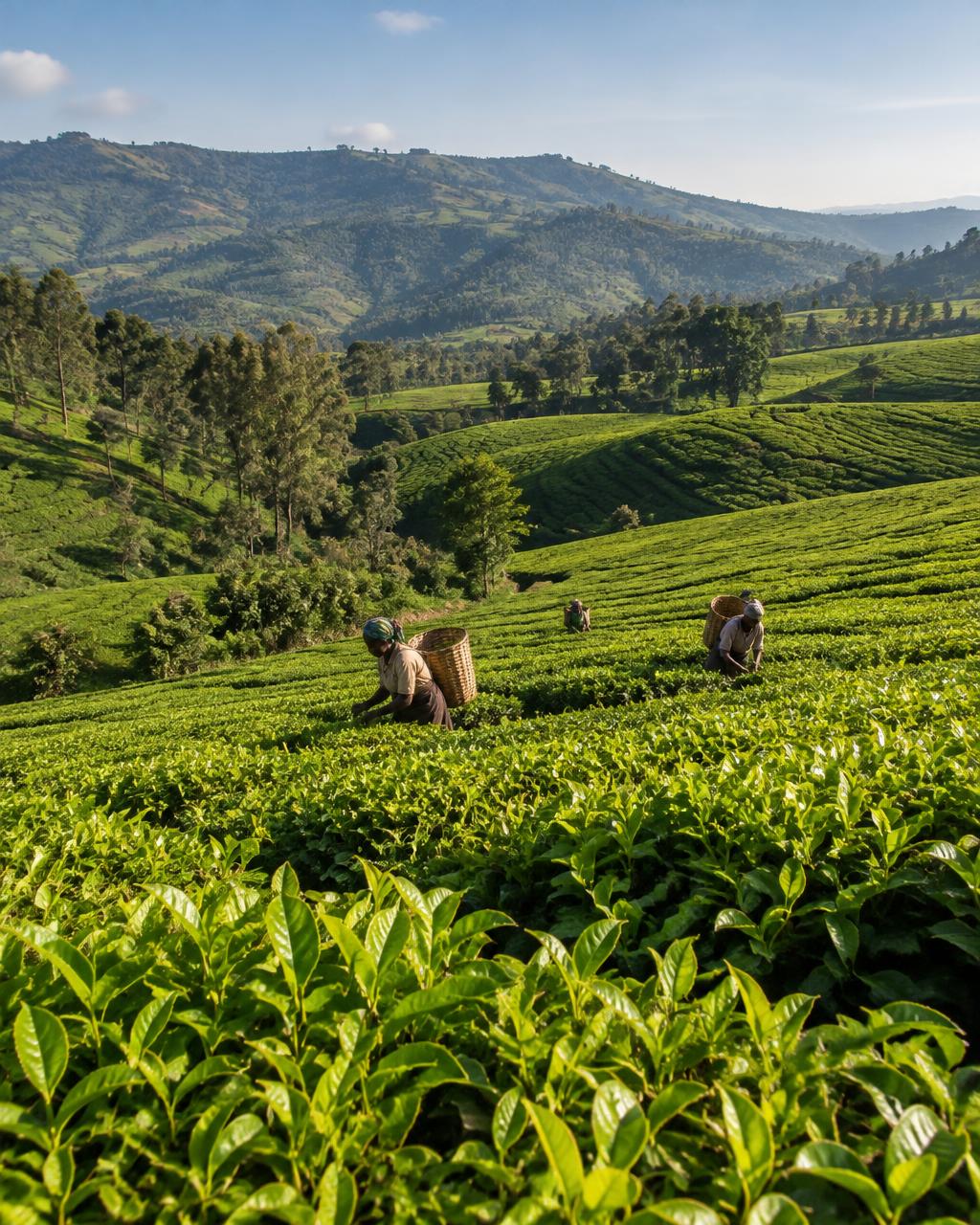
East African highlands · Teza & Rwegura
Origin 04
Burundi بوروندي
Brisk · Coppery · Full-bodied
Burundi brings another East African perspective to the tea portfolio: highland black teas with body, lively brightness and blending potential.
- Growing landscape
- Highland tea areas include Teza and Rwegura. Cool upland conditions shape the leaf; garden, harvest and processing determine the final cup.
- In the cup
- CTC black teas are commonly described as brisk and full-bodied with bright coppery liquor. Orthodox styles can offer amber colour and layered aroma.
- Tea styles & grades
- CTC black tea, orthodox tea and green tea are produced at origin. Confirm the offered grade, garden and packing format for each enquiry.
- Trade applications
- Strong breakfast and milk-tea blends, tea-bag programmes and origin-focused loose-leaf selections, depending on the offered lot.
- Brewing starting point
- CTC black tea: 2 g per 200 ml, freshly boiled water, 2–3 minutes. Orthodox black tea: 2–3 g per 200 ml for 3–4 minutes.
Selecting a lot
The right tea for your market
Origin profiles describe typical styles, not guaranteed specifications. Grade names indicate leaf size or manufacture, not a universal quality ranking. Cup character and availability vary by lot, harvest and producer; request samples and current specifications before ordering.
Brewing notes are starting points for black tea, not fixed standards. Adjust the dose and time to the particle size, water and desired strength; request separate guidance for green or white styles.