
Hameed Tea — شاي حميد
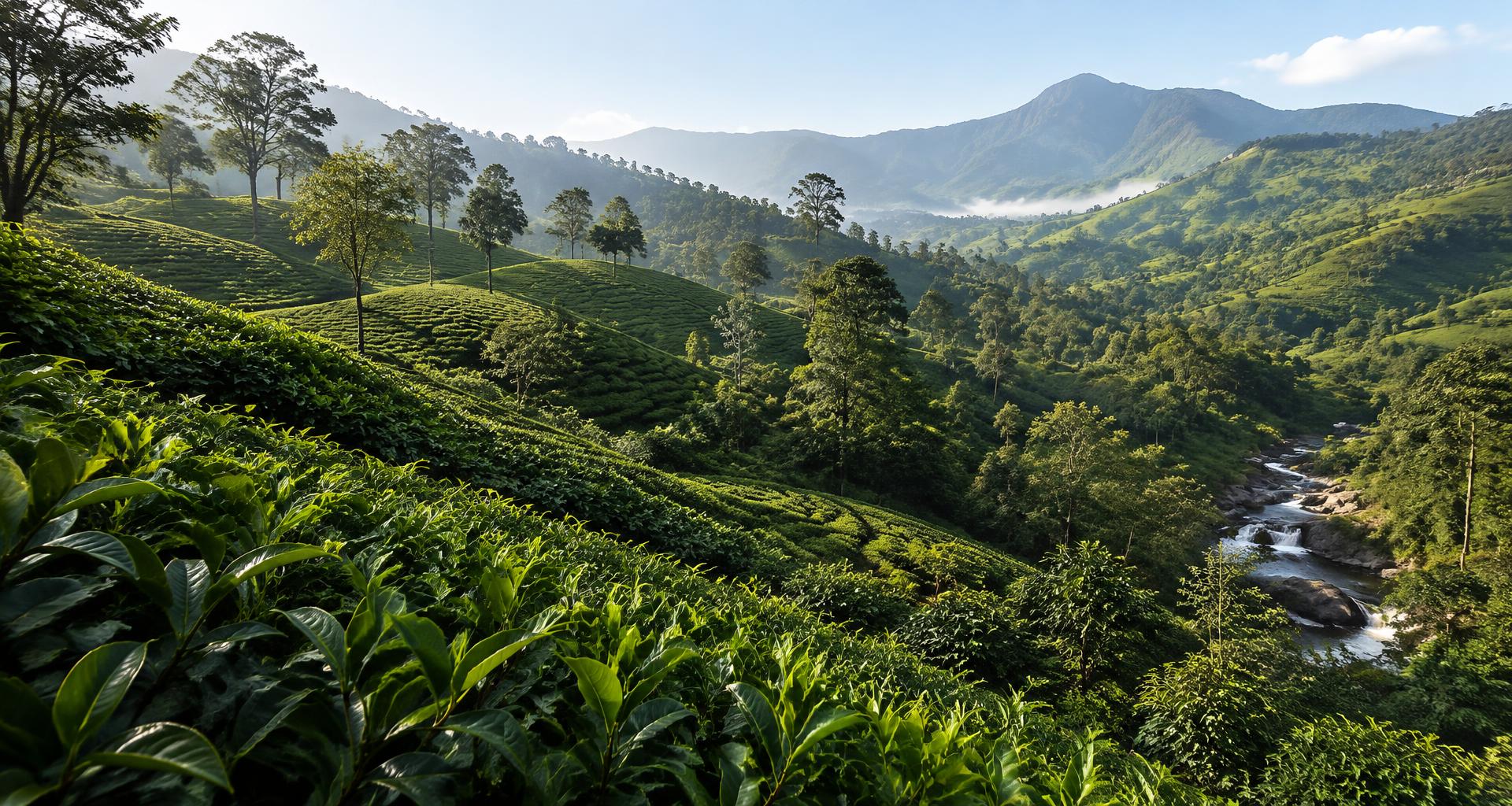
Illustrative tea gardens with shade trees, protected woodland and a flowing stream

Responsible origins · Thoughtful trade

Sustainability

The future of tea depends on the land that grows it, the people who make it and the choices that carry it around the world.

Our outlook

Good tea should leave a better story behind it.

For Hameed Tea, Muscat is the connection between four tea origins and buyers worldwide. That connection carries a responsibility: to ask where a lot comes from, how it is made, who benefits from its trade and what its journey leaves behind.

This page sets out the practices a responsible tea trader and exporter should follow. It is a framework for informed sourcing conversations and ongoing improvement — not a claim that every practice has already been independently verified across our supply chain.

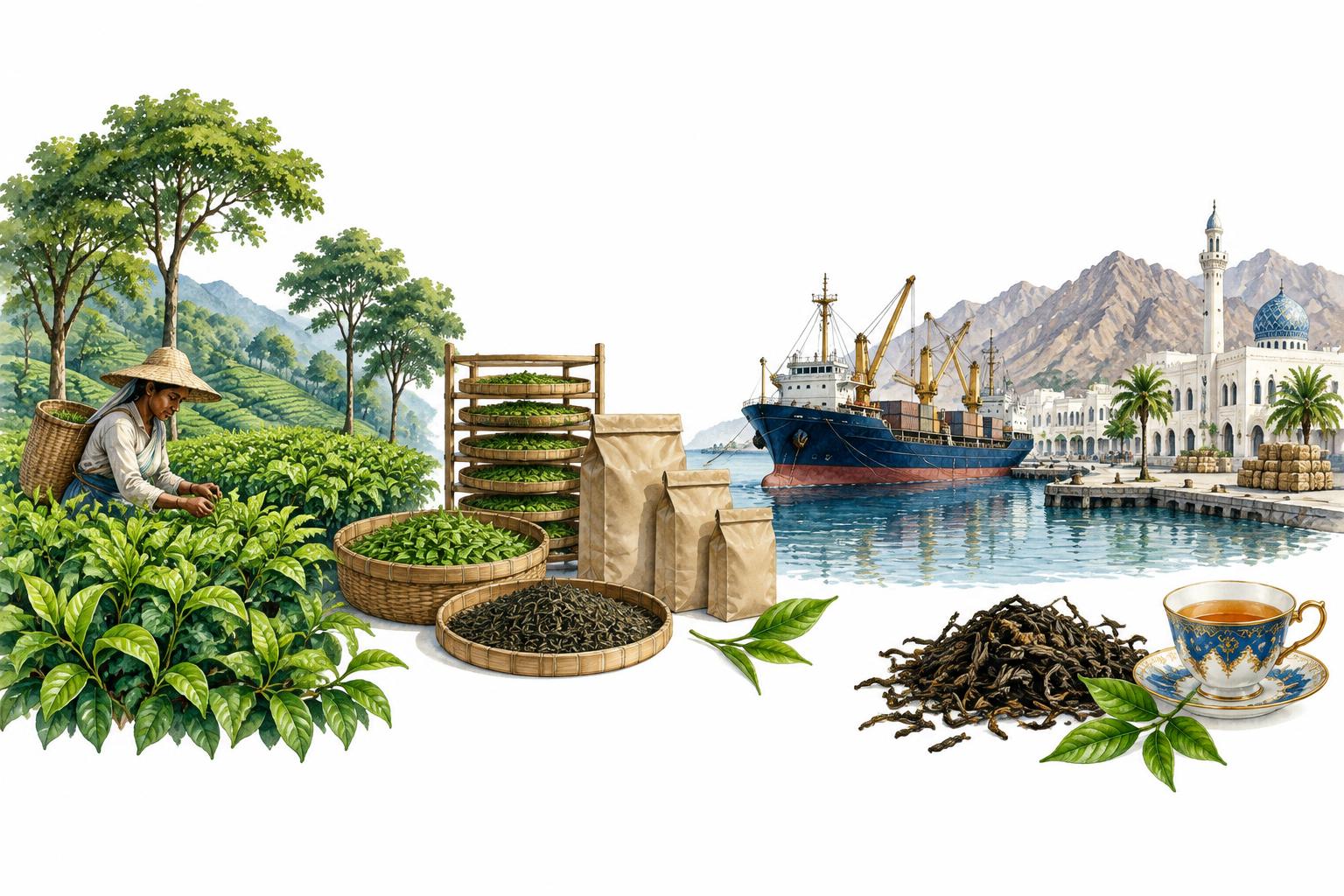
Watercolour illustration connecting tea gardens, processing, sea trade through Oman and a finished cup
Illustrative journey — not a photograph of a specific supplier, facility or shipment.
  1. 01

    At origin

    Healthy soils, protected habitats and decent work in India, Sri Lanka, Kenya and Burundi.

  2. 02

    In production

    Resource-efficient processing, safe handling and packaging suited to real recovery systems.

  3. 03

    Through Oman

    Traceable lots, well-planned freight and careful storage coordinated through Muscat.

  4. 04

    To your market

    Destination-specific documents, truthful claims and a clear trail back to the source.

A practical responsibility framework

Eight areas. One connected responsibility.

Environmental care, human rights and sound trade controls belong together. Each area below connects a practical action with the evidence a buyer or trader should request.

A sustainable shipment begins long before a purchase order. The soil, shade trees and water catchments around a tea garden shape both its harvest and its future. A trader should use purchasing decisions to support responsible land management, not simply the lowest price.

Soil and native habitats

Ask suppliers about ground cover, contour planting, erosion control, soil testing and organic matter management. Protect native woodland, wildlife corridors and streamside buffers; avoid sourcing linked to conversion of natural ecosystems.

Responsible crop protection

Request integrated pest management plans that favour monitoring and biological controls. Check authorised pesticides, application records, safe storage, protective equipment and destination-market residue limits. Organic claims require a valid certification system, not just a pesticide-free statement.

Climate resilience

Discuss drought, flood and heat exposure with gardens. Encourage suitable shade, locally appropriate planting material, soil moisture retention and diversification, rather than assuming all origins need the same interventions.

Origin-specific attention

For South India’s Munnar, Nilgiris and Wayanad, review hillside erosion and catchment protection; in Sri Lanka, slope stability and soil cover; in Kenya and Burundi, smallholder support, soil fertility and responsible fuel sourcing. Assess each actual supplier rather than generalising about an entire country.

Evidence to request: Garden identity, land-use records, farm-management plan, pesticide register and risk-based supplier assessments.

International standards & guidance

Standards matter.
Their scope matters just as much.

A certification scheme, an organic market rule and an emissions framework answer different questions. These official references guide responsible trade; they are not a list of accreditations held by Hameed Tea.

Certification scheme

Rainforest Alliance

Farm and supply-chain requirements covering environmental and social practices. Verify the relevant operator, product scope, traceability model and permission for any claim.

Read official sourceknowledge.rainforest-alliance.org

Certification scheme

Fairtrade

Producer and trader requirements for fairer trading relationships, traceability and applicable price or premium terms. Confirm the tea and trader standards, certification scope and mark licence.

Read official sourcewww.fairtrade.net

Market-specific organic rules

EU Organic

Tea sold as organic in the EU must meet the applicable production, operator-control and import requirements. Confirm the authorised control body and required certificate of inspection before shipment.

Read official sourceagriculture.ec.europa.eu

Market-specific organic rules

USDA Organic

US organic imports require applicable certified handling and valid electronic NOP Import Certificate data. Check the actual production and handling chain; exporting via Oman does not establish organic eligibility.

Read official sourcewww.ams.usda.gov

Environmental management standard

ISO 14001

Structures environmental risks, legal obligations, objectives and continual improvement at an organisation. It is not a tea-product eco-label; implementation and independent certification are different.

Read official sourcewww.iso.org

Emissions accounting framework

GHG Protocol

Guidance for organisational and value-chain greenhouse-gas inventories. Define Scope 1, 2 and relevant Scope 3 boundaries and disclose data quality. An inventory is not a carbon-neutral certificate.

Read official sourceghgprotocol.org

Responsible business framework

OECD Due Diligence

Identify risks, prevent and mitigate harm, track results, communicate and enable remedy. Certification does not replace this process; legal duties depend on the business and relevant jurisdictions.

Read official sourcewww.oecd.org

Labour rights baseline

ILO Fundamental Principles

Freedom of association, elimination of forced and child labour, non-discrimination, and a safe and healthy working environment. These are principles, not a private company certification.

Read official sourcewww.ilo.org

Food hygiene reference

Codex & HACCP

Hazard analysis, hygiene and preventive controls help keep tea safe during processing, storage and supply. Food safety complements responsible trade but does not certify environmental or social performance.

Read official sourcewww.fao.org

These links lead directly to the publishers. Some sites may require a browser security check; full ISO standards may require purchase. Publisher access restrictions cannot be removed by Hameed Tea.

Evidence before promises

Measure what moves the story forward.

A credible improvement programme starts with a baseline, not a headline percentage. These are recommended measures to collect — not reported Hameed Tea results.

Climate

kg CO₂e / kg tea

Purchased tea, packing, storage and freight; report boundaries and absolute emissions.

Resources

kWh & litres / kg tea

Factory or warehouse energy and water, with source and site context.

Materials

g packaging / kg tea

Material mix, verified recoverability and tea lost or damaged in transit.

People

Findings & remedy

Worker concerns, payment performance and verified corrective-action closure.

  1. 01Establish a baseline
  2. 02Prioritise the risks
  3. 03Act with suppliers
  4. 04Review and disclose

A better-informed buying brief

Bring your sourcing priorities to the table.

Tell us your destination, tea style, volume and required certification. Ask for the specific supplier-lot documents and agree the evidence your market needs before an order is confirmed.

Discuss responsible sourcing

Selected certified teas and documents are subject to supplier and lot confirmation.