
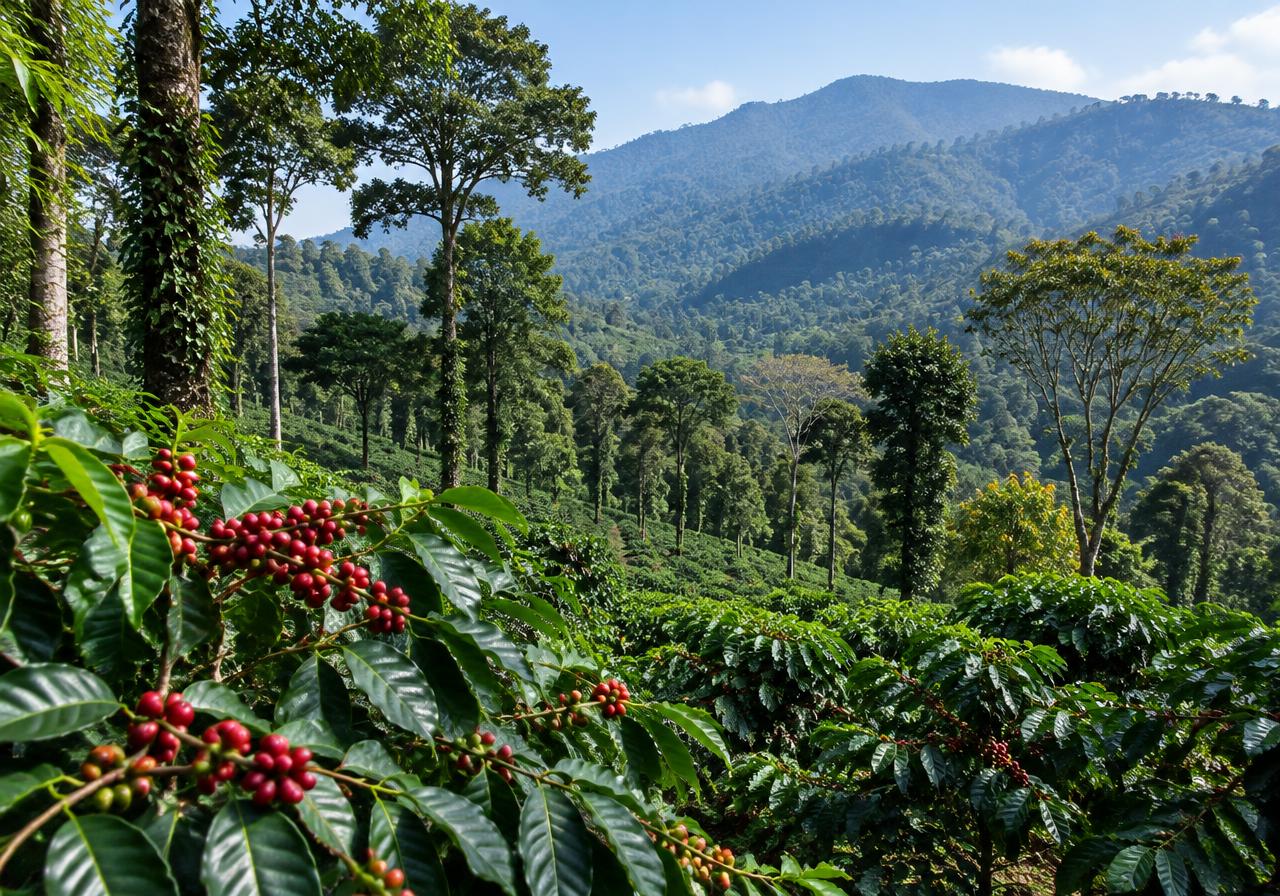
Four coffee origins · One Muscat hub
Coffee origins
India, Indonesia, Vietnam and Ethiopia — Arabica and Robusta profiles for roasters, importers, retailers and hospitality buyers worldwide.
Origin gives a coffee context; a sample gives it a specification. These 24 selections describe regional, process and grade categories, not 24 botanical cultivars or a live stock list. Harvest, traceability, preparation and commercial terms are confirmed before supply.
Coffee origin / 01
India
Shade-grown diversity · Arabica & Robusta
South Indian coffee grows within the shaded landscapes of the Western Ghats. Arabica and Robusta offer different buying roles, while monsooning and specialty grades add distinctive commercial categories.
Growing areas: Chikmagalur, Bababudangiri, Coorg/Kodagu and Wayanad
Growing landscape
Shade trees and mixed farm systems are important features of traditional Indian coffee cultivation. Elevation, rainfall, cultivar and preparation vary between estates; the region name alone is not a specification.
Processing & cup
Washed coffees, dry-processed cherry coffees and Monsooned Malabar are separate offers. Mysore Nuggets Extra Bold is a specialty grade, not a botanical variety.
What to verify
Ask for estate or producer identity, harvest, species, process, grade, screen size, moisture, defects and a representative pre-shipment sample. Confirm any regional or specialty designation with supplier documents.
Six coffee selections
- Chikmagalur Washed ArabicaArabica · Washed
- Bababudangiri ArabicaArabica · Washed — offered process to confirm
- Coorg ArabicaArabica · Washed — offered process to confirm
- Wayanad RobustaRobusta · Dry-processed — offered preparation to confirm
- Monsooned Malabar ArabicaArabica · Monsooned
- Mysore Nuggets Extra BoldArabica · Washed · Specialty grade
Coffee origin / 02
Indonesia
Island character · Body & complexity
Indonesia is an archipelago of coffee origins, not one uniform cup. Sumatra, Sulawesi, Bali and southern Sumatra offer regional Arabica and Robusta profiles for roasters and blend buyers.
Growing areas: Aceh/Gayo, North Sumatra, Toraja, Bali and Lampung
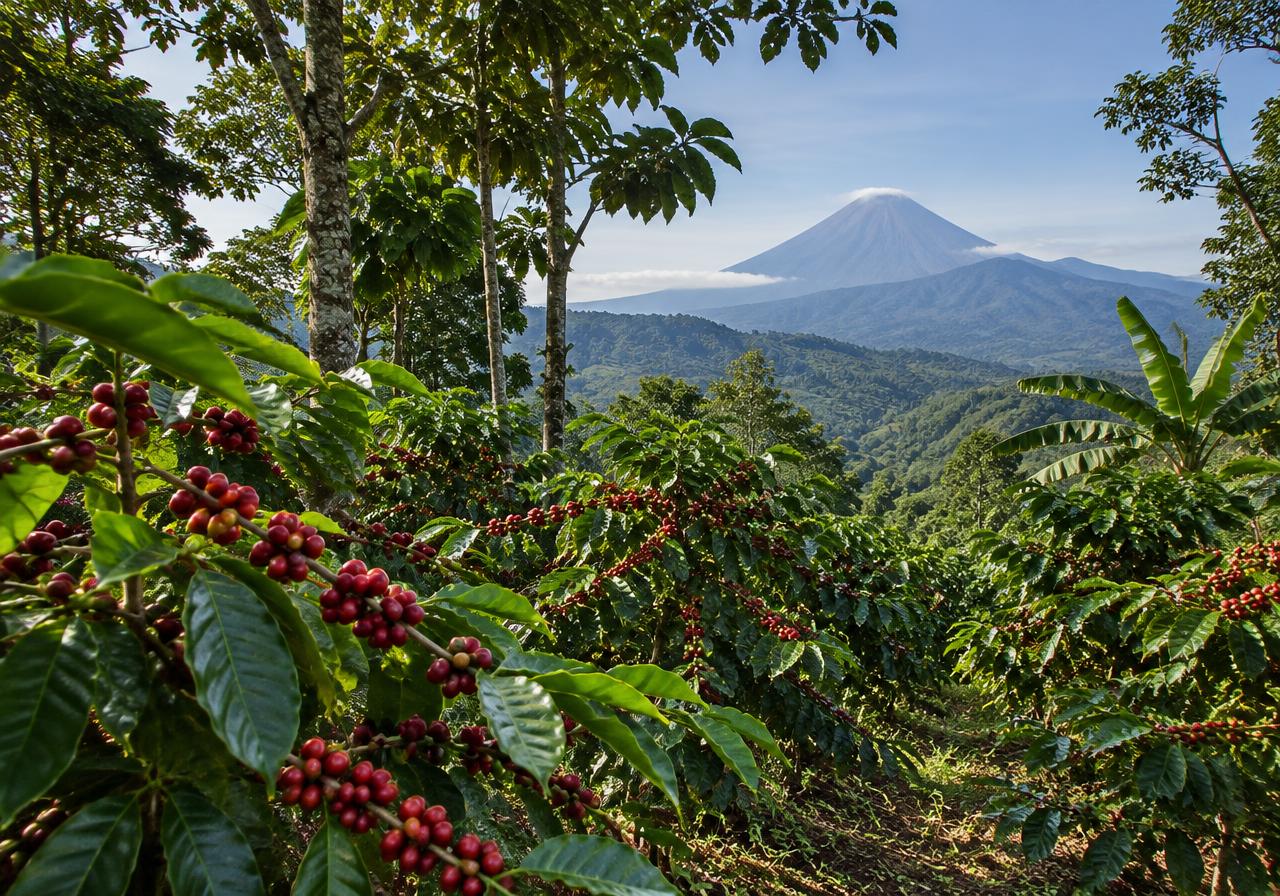
Growing landscape
Mountain Arabicas and warmer-zone Robustas reflect different islands, soils and growing conditions. Producer, district and harvest records are essential when buying a named origin.
Processing & cup
Wet-hulling (giling basah) is associated with many Sumatran offers; washed, natural and other processes are also traded. Wet-hulled and fully washed are not interchangeable descriptions.
What to verify
Confirm island, district, species and preparation. Check defect tolerances and moisture, sample the lot, and verify eligibility before presenting an origin as a protected geographical indication.
Six coffee selections
- Gayo ArabicaArabica · Wet-hulled — offered process to confirm
- Mandheling ArabicaArabica · Wet-hulled — offered process to confirm
- Lintong ArabicaArabica · Wet-hulled — offered process to confirm
- Toraja ArabicaArabica · Washed or wet-hulled — confirm lot
- Kintamani Bali ArabicaArabica · Washed — offered process to confirm
- Lampung RobustaRobusta · Dry-processed — preparation to confirm
Coffee origin / 03
Vietnam
Robusta strength · Emerging Arabica distinction
Vietnam’s Central Highlands are central to international Robusta trade. Alongside body-forward blend coffees, selected Arabicas and washed Robustas offer opportunities for origin-led café and roasting programmes.
Growing areas: Đắk Lắk, Buôn Ma Thuột, Gia Lai and Lâm Đồng
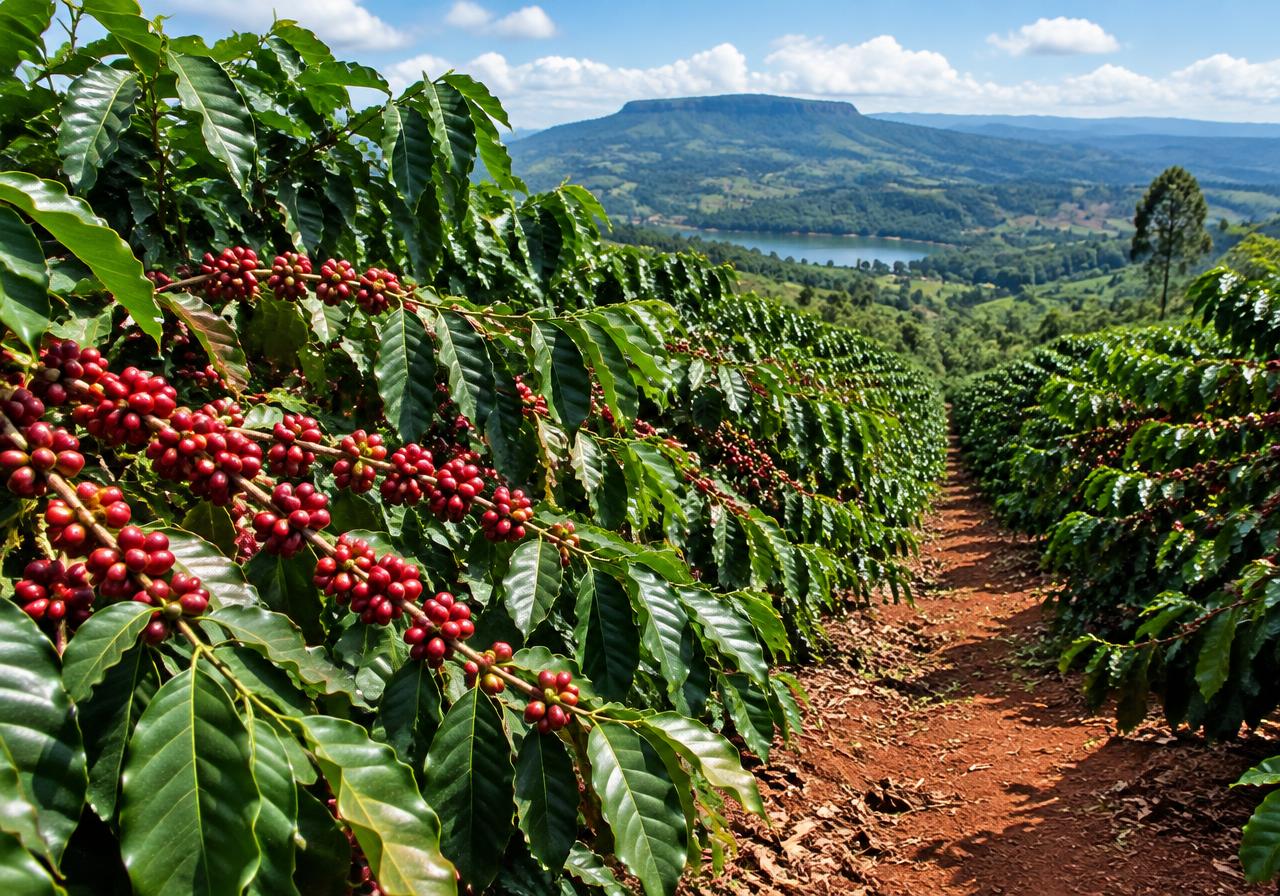
Growing landscape
Robusta is the country’s dominant commercial species, particularly in the Central Highlands. Arabica is a smaller segment associated with suitable cooler, higher areas; confirm the actual farm location.
Processing & cup
Dry-prepared and washed coffees require different cup and defect expectations. A washed Robusta offer describes a process, not a new botanical variety.
What to verify
Specify species, harvest, region, preparation, screen, defect limits, moisture and cup requirements. Compare offers on equivalent terms; a generic Vietnam quotation cannot establish quality or supply readiness.
Six coffee selections
- Central Highlands RobustaRobusta · Dry-prepared
- Đắk Lắk RobustaRobusta · Dry-prepared — lot preparation to confirm
- Buôn Ma Thuột RobustaRobusta · Dry-prepared — lot preparation to confirm
- Gia Lai RobustaRobusta · Dry-prepared — lot preparation to confirm
- Lâm Đồng ArabicaArabica · Washed — process to confirm
- Vietnam Washed RobustaRobusta · Washed
Coffee origin / 04
Ethiopia
Arabica heritage · Floral & fruit-led cups
Ethiopia offers a rich Arabica heritage and highly distinctive regional coffees. Washed and natural preparations from the same broad origin can behave very differently in a roast and cup.
Growing areas: Sidama, Yirgacheffe, Guji and Harar
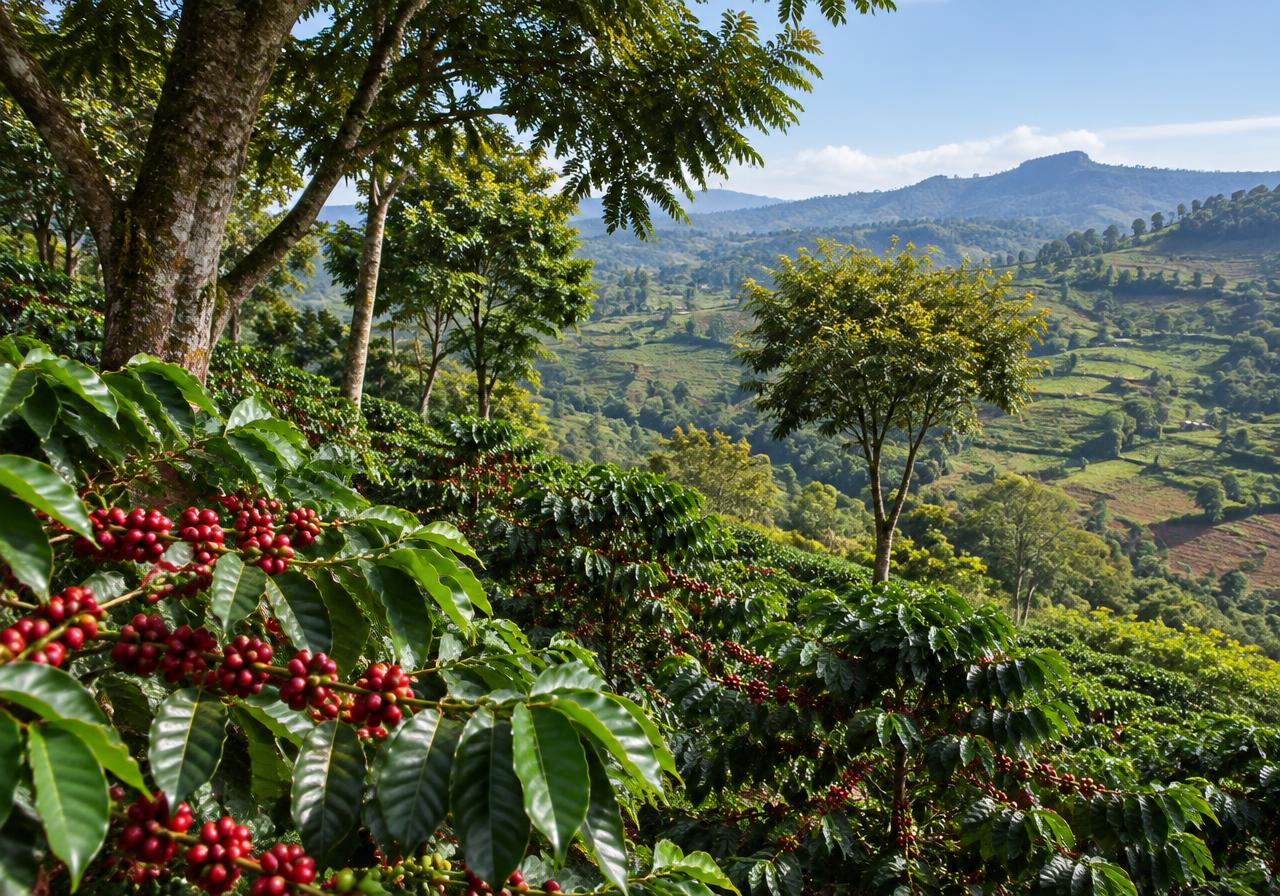
Growing landscape
Regional names describe producing areas, not a single cultivar. Local landraces and improved varieties may coexist; identify the producer, washing station or exporter and offered lot rather than using “heirloom” as a precise variety claim.
Processing & cup
Washed lots are often sought for clarity; natural lots for fruit intensity. These are indicative expectations, not guaranteed flavours. Drying, sorting and storage affect the final sample.
What to verify
Request harvest, producing area, station or producer, process, export grade and defect standard. No cup score or grade should be assumed from a regional name; evaluate a sample and agree the specification.
Six coffee selections
- Sidama Washed ArabicaArabica · Washed
- Sidama Natural ArabicaArabica · Natural / dry-processed
- Yirgacheffe Washed ArabicaArabica · Washed
- Yirgacheffe Natural ArabicaArabica · Natural / dry-processed
- Guji ArabicaArabica · Washed or natural — confirm lot
- Harar Natural ArabicaArabica · Natural / dry-processed
Your coffee brief, coordinated through Oman.
Tell us the origin, species, preparation, green or roasted requirement, volume and destination. Request representative samples, harvest information and the exact supplier-lot documents.
Discuss coffee sourcing